In earlier article we have discussed about various aspect of Libor and its Impact on buyers credit transaction.
In brief, Libor attempts to answer a fundamental question: What is the cost of money? It does this for a range of currencies (dollars, euros, pounds, etc.) and for a range of maturities.
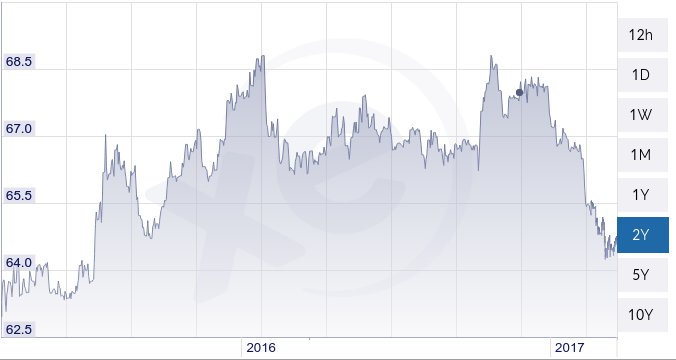
From 62 Level starting 2015, USD INR moved to 68 levels and since then has come back to 64 levels in 2017. This article explores impact of stronger rupee on importers who have availed buyers credit.
In order to avail above buyers credit, Importer will have to get term loan sanctioned with buyers credit as sub-limit with his bank. As seen in earlier article “Buyers Credit on Capital Goods“, moratorium period is one of the factor which importer needs to take care at time of sanctioning of term loan. This article explains
Buyers Credit transactions are funded on Libor rates. Thus any change in Libor directly impact overall costing of the transaction.
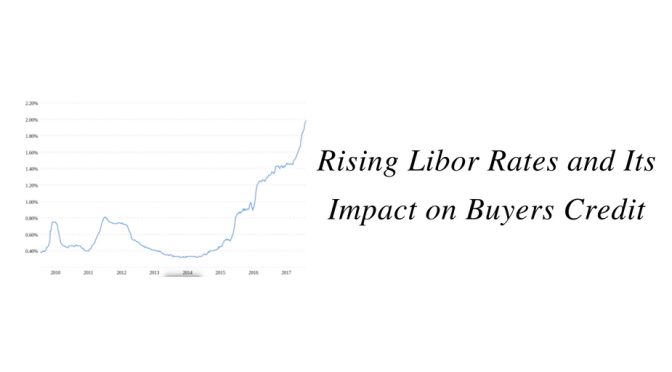
Libor rates started rising in 2015 and pace of which got picked up since beginning of 2017. Below 3 Month Libor and 6 Month Libor charts shows the trend. There are two charts for two range.
Form 15CA and Form 15CB Certificate may be applicable in few cases of Buyers Credit Repayment. Over the period of time there has been many changes to regulation and latest one issued on 16th December 2015 and got implemented from April 1, 2016.
As seen in earlier article “Form 15CA & Form 15CB applicable on all payment“, except the exempted list, Form 15CA and Form 15CB was required for all type of payment. This resulted into lot of paper work for importers during regular import transactions.
Trigger for this topic is a question that a reader asked:
“MSME manufacturing unit doing expansion of machinery by purchasing machinery from abroad get creditlinked capital subsidy scheme (CLCSS) from Central Government.
MSME unit avails buyers credit for payment to overseas buyer and sanctioned term loan is not utilised . Can the unit be eligible for subsidy? ”
Below article gives basic details about Credit Linked Capital Subsidy Scheme and revert to above query.
RBI issued a circular on 10 Sep 2015, revising the policy on Trade Credit (Buyers Credit & Suppliers Credit). Summary of the same is given below:
As per revised guidelines, RBI has allowed resident importer to raise trade credit in Rupees (INR) within below framework after entering into a loan agreement with the overseas lender:
In revised notification issued by CDBT on 16th December 2015, effective 01’st April 2016, import payment has been made part of exempted list. Hence forth Form 15CA and Form 15CB will not required for the same during import transactions.
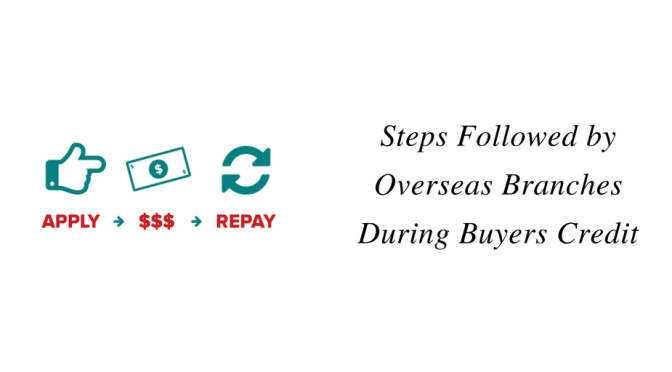
Indian Bank Overseas Branches / Foreign Bank has to carry out many processes pre and post disbursement of buyers credit. Below are the steps from end to end.
Importer has to submit a list of documents for making import payments. One such documents was A1 Form except for import payment less than $ 5000. RBI with its circular dated 12 February 2015, has removed this requirement.
Importer regularly gets multiple bills from same supplier and from multiple suppliers. Clubbing these multiple import bills to a single Buyers Credit transaction will reduce overseas bank interest cost.
Letter of Undertaking in simple terms is bank guarantee issued by Indian bank against which overseas bank provide finance on Libor rates. Libor linked finance used by importers are Buyers Credit, Suppliers Credit, ECB etc. Libor linked finance used by exporters is PCFC (Packing Credit in foreign currency)
The trigger for this topic is a question that a reader asked:
“I would like to know whether service tax is applicable under Section 66A of the erstwhile Act on availing Buyer’s credit? It is not only the interest which is paid but a number of other fees like the management fees, arrangement fees, hedging cost etc which is paid to banks by the importer”
The trigger for this topic is a question that a reader asked:
We have a processing facility of granite. Can we use buyers credit for consumables (our banker refusing for consumables). As per them only raw material is allowed for buyer credit
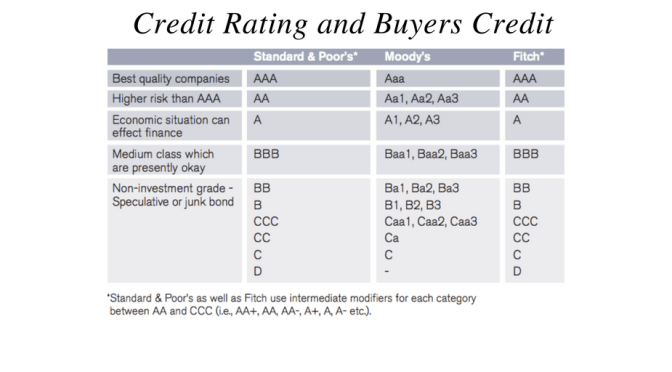
A credit rating represents the rating agency’s opinion on the likelihood of a rated debt obligation being repaid in full and on time. Usually alphanumeric symbols are used to convey a credit rating. Credit rating can be Internal Rating (Banks rate customers internally) or External Rating by external agencies like CRISIL, ICRA and others.
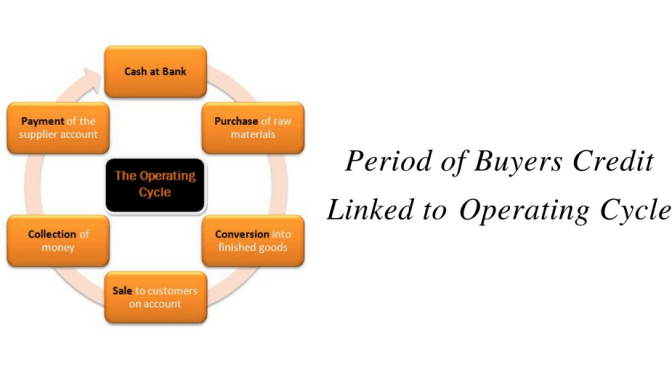
Incase of raw material imports, RBI had delegated approving powers to Authorised Dealers (Banks) for Trade Credit (Buyers Credit / Suppliers Credit) for a tenure upto 1 year from the date of shipment. Bank’s based on internal policies decided customerwise tenure. Because of variation in policies between banks, few importers used buyers credit for arbitrage.
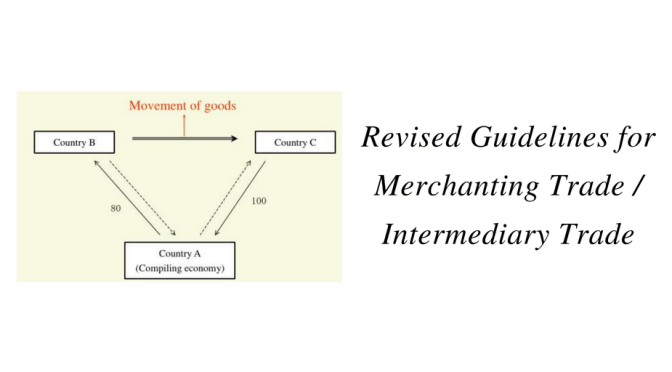
Further to article published below, RBI received suggestion from merchanting traders and trade bodies, based on which guidelines on merchanting trade transactions have been further reviewed on 28th March 2014 and with effect from 17th January 2014. Summary of the changes are given below.
The trigger for this topic is a question that a reader asked:
Since Foreign Trade Policy allows imports in INR (Indian Rupees) also, what are the regulations related to buyer’s credit in respect of an import invoice which is in INR ?
Above question is more of an academic question as INR denominated import transaction are very limited but it will help in throwing light on concept of permitted methods of import payment.
The trigger for this topic is a question that a reader asked:
Question : What are the RBI guidelines for availing Letter of credit facility and/or buyers credit facility for the import of second hand capital goods? Is it possible for a company to avail these facilities for second hand machinery?
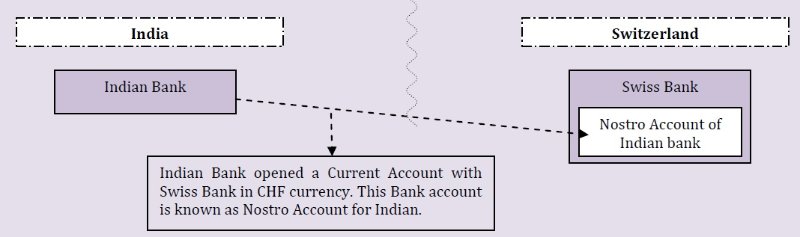
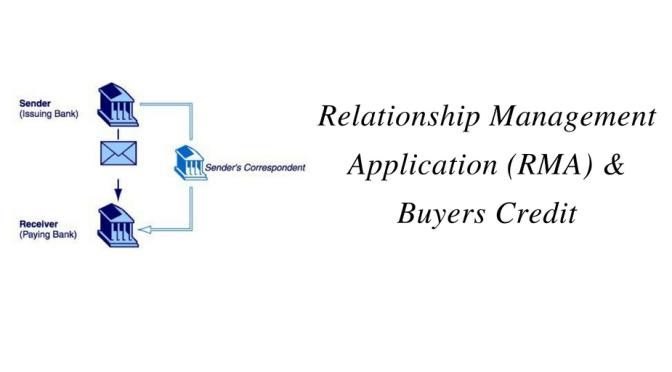
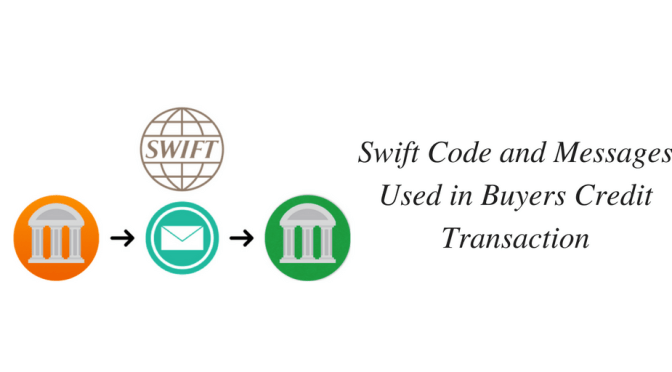
Using Swift Codes Banks and Financial Institutions send and receive swift messages. But there must have been times where you might have come across your bankers coming back to you stating that they do not have swift key arrangement with buyers credit bank. Thus they will not be able to send Letter of Undertaking (LOU) / Letter of Comfort (LOC) authenticated swift message (MT799) to buyers credit bank. Below article gives a brief about why situation arise.
On 29 August 2013 Dr. D Subbarao Governor, Reserve Bank of India delivered the attached speech on occasion of Tenth Nani A. Palkhivala Memorial Lecture at Mumbai.
Post below article CBDT has revised rules for form 15CA and Form 15CB. Please refer above article for further detail.
In earlier article about Withholding Tax (WHT), we have discussed about the process and applicability of Form 15CA and 15CB. On 5th August, 2013 CBDT revised the guidelines on Form 15CA and Form 15CB and further amended on 02nd September 2013. Below article gives a summary of changes made.
SWIFT code (also known as ISO 9362, SWIFT-BIC, BIC code, SWIFT ID or SWIFT code) is a standard format of Business Identifier Codes approved by the International Organization for Standardization (ISO). It is a unique identification code for both financial and non-financial institutions. These codes are used when transferring money between banks, particularly for international wire transfers, and also for the exchange of other messages between banks.
In September 2012, CBDT had prescribe a format in which Tax Residence Certificate (TRC) was required from April 2013. In the Amendments to Finance Bill 2013, requirement of prescribed format has been done away with. Below article gives further details on the same.
Buyers Credit is arranged against Letter of Undertaking (LOU) / Letter of Comfort (LOC) issued by Importer’s Bank. During this period if importer decides to shift his limits from X bank to Y bank, few complications arise. For a Raw material transaction, importer may decide not to rollover the transaction to avoid complications; but for Capital goods Importer has lesser options. If the buyers credit does not get rolled over, the same would get converted into term loan which would cost the importer higher rate of interest. This article provides details on process to be followed and what documents are needed for smooth transition. For understanding let assume,
In earlier articles, we had seen that, banks are permitted by RBI to approve Suppliers’ and Buyers’ Credit (Trade Credit) including the usance period of Letters of Credit opened for Import of gold in any form including jewelery made of gold/ precious metal and or studded with diamonds /semi precious /precious stone not exceeding 90 days from the date of shipment.
Myanmar has been under various international economic sanction for more than a decade, which has crippled its international trade. Below article gives a background of economic sanctions on Myanmar, recent relaxations in these sanctions and what will be its likely impact on trade finance from Indian importers perspective.
High Sea Sales (HSS) is a sale carried out by the carrier document consignee to another buyer while the goods are yet on high seas or after their dispatch from the port/airport of origin and before their arrival at the port/ airport of destination.
Readers have come back asking for calculator to arrive at total cost on buyers credit transaction. To help readers, a link to excel sheet with buyers credit cost calculation is given below.
The earlier article on Buyers Credit on Gold Import, specified rules and process under which buyers credit can be taken against gold import. RBI has recently come out with a circular which resulted in changes in financing of gold; which in turn would also affect buyers credit on gold import. This article gives extract of the circular and its impact on various stake holders:
Note: Post this article there are changes in maturities for which libor is issued. This article might now be relevant for long tenure transactions (12 Months and Above). Refer link for more details on change in Libor: Change in LIBOR Tenures and Impact on Trade Finance
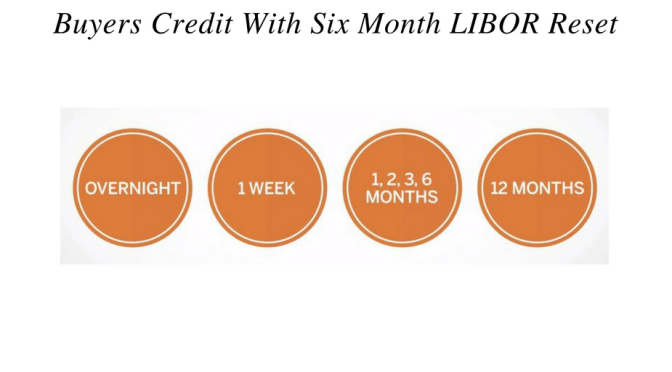
Banks and Importers consider various factors before going for Buyers Credit transaction for more than 6 months tenure. One such factor is buyers credit with 6 Month Libor Reset option. The below article elaborates on these factors.
After the expiry of deadline of 30-09-2012, there was a prolonged uncertainty for last 9 days on what is the all in cost ceiling for Trade Credit (Buyers Credit / Suppliers Credit). Reserve Bank of India (RBI) issued a clarification or revised circular today clarifying the same. Summary of the same is given below
Maximum Interest cap for Upto 5 Years : 6 Month Libor + 350 bps. This rate has been referred in it circular 11-09-2012 (Link given below)
Until further review, the rate remains same. Thus, this time there is no deadline set for the review of the above rate to avoid any slippage like above.
Mr. Martin Wheatley – Managing Director, FSA, and CEO Designate, FCA – gave a speech at the Wheatley Review of LIBOR. It contain details on various issues in relation to LIBOR and his final recommendation of rectifying the same. It is worth reading, thus sharing with you complete speech below.
Sec 90 of Income Tax Act 1961 has been amended by inserting Sec 90 (4). Details of the section has been given below. Sec 90 (4) have many implications, but this article is concentrating on its implication on Buyers Credit transaction.









 On 29 August 2013 Dr. D Subbarao Governor, Reserve Bank of India delivered the attached speech on occasion of Tenth Nani A. Palkhivala Memorial Lecture at Mumbai.







 Buyer's Credit & Supplier's Credit