The Basel Committee on Banking Supervision (BCBS, or Basel Committee) is an institution created by the central bank Governors of 27 members from both developed and emerging economies. The most influential publications by the BCBS are Basel Accords. The key part of Basel framework as commonly referred to, guides banking industry how to calculate risk-weighted assets (RWA) and capital requirements. The Basel Committee gave its final text of Basel III on Dec 2010 of details of updated global regulatory standards on bank capital adequacy and liquidity, which was agreed by the Governors and Heads of Supervision, and endorsed by the G20 Leaders at their November 2010 Seoul summit.
All posts by Sanjay Mandavia
Suppliers Credit or Buyers Credit is not available for Merchanting Trade
Post below articles, guidelines have been revised. Please refer article “Revised Guidelines for Merchanting / Intermediary Trade“
Continue reading Suppliers Credit or Buyers Credit is not available for Merchanting Trade
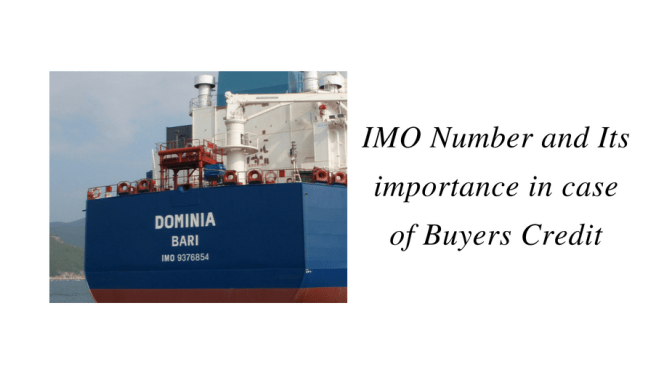
IMO Number and Its importance in case of Buyers Credit
What is IMO Number ?
The IMO ship identification number is made of the three letters “IMO” followed by the seven-digit number assigned to all ships by IHS Fairplay when constructed. This is a unique seven digit number that is assigned to propelled, sea-going merchant ships of 100 gross tons and above. It serves the purpose of identifying ships. It is a Unique number which does not change, even if when the ship’s owner, country of registry or name changes.
Continue reading IMO Number and Its importance in case of Buyers Credit

Country-wise Double Taxation Summary Chart on Interest
Below Country-wise double taxation summary chart provides Tax rate and Article reference number applicable on interest payments to beneficiary outside India. Same will be useful at the time of filling up Form 15CA and Form 15CB
Continue reading Country-wise Double Taxation Summary Chart on Interest
Consequence of Non Deduction of Withholding Tax (WHT / TDS)
As with other TDS defaults the consequences for Non deduction of Withholding Tax (WHT) may be broadly classified as under:
Continue reading Consequence of Non Deduction of Withholding Tax (WHT / TDS)
Form 15CA and 15CB under Section 195 of Income Tax
Refer Revised Article : Form 15CA and Form 15CB not Required for Import Payments
Post below article CBDT has revised rules for form 15CA and Form 15CB effective from April 01, 2016. Please refer above article for further detail.
Continue reading Form 15CA and 15CB under Section 195 of Income Tax
OFAC Countries & Implication on Buyers Credit
What is OFAC Sanctions ?
- The Office of Foreign Assets Control (OFAC) is an office of the Treasury Department of United States of America (US).
- OFAC administers and enforces economic and trade sanctions based on U.S. foreign policy and national security goals against targeted foreign countries, organizations, entities, and individuals.
- Regulations issued under Trading With the Enemy Act (50 U.S.C. App.§§ 1-44) or by the US President under authority delegated under the International Emergency Economic Powers Act.
- The OFAC sanctions programs are implemented through restrictions on imports and exports, prohibitions on financial transactions, freezing of assets, and other means.
Continue reading OFAC Countries & Implication on Buyers Credit
Review of all-in-cost ceiling – Trade Credit
In its circular dated 30/03/2012, RBI has decided to continue with the enhanced all-in-cost ceiling for Trade Credit for further period of six months.
- Maximum Cap on Interest Rate for tenure Upto 3 years : 6 Month LIBOR + 350 bps
- Applicable Upto: 30/09/2012 (Subject to review there after)
Buyers Credit All-In-Cost Ceiling may move back to L+200bps from 01/04/2012
In its Circular dated 15/11/2011, RBI had increased the all-in-cost ceiling for Buyers Credit from 6 Month L+ 200 bps to 6 Month L + 350 bps subject to condition that is only upto 31/03/2012 and after subject to review there after.
Continue reading Buyers Credit All-In-Cost Ceiling may move back to L+200bps from 01/04/2012
Buyers Credit for Imports Under Direct Documents
RBI Circular of External Commercial Borrowing and Trade Credit gives information about buyers credit. But with specific type of transaction, inference has to taken from other related circulars. For example, for Buyers Credit in case of import against direct documents received by importers, RBI Circular on Import of Goods and Services has to be referred along with Trade Credit Circular. RBI has put in various criteria under which such transactions are allowed.
Continue reading Buyers Credit for Imports Under Direct Documents

Difference between Buyers Credit and Letter of Credit (LC)
1. LC is one of the payment mode used in the International Trade between importer and exporter to cover third-party credit risk. Meaning if the importer defaults, his bank will have to pay on his behalf. Whereas, Buyers credit is a funding mechanism used by importer to funds his transaction. Continue reading Difference between Buyers Credit and Letter of Credit (LC)
Comprehensive Guidelines on Foreign Exchange Derivatives
RBI via circular dated 28/12/2010 revised the extant guidelines on OTC (Over the Counter) Foreign Exchange Derivatives and which became effective from 1st February 2011. Below is the extract of the guidelines related to importers and exporters.
Continue reading Comprehensive Guidelines on Foreign Exchange Derivatives

Recent Changes to India’s Currency Forward Contract Norms for Hedging
RBI via circular dated 15/12/2011 made changes in Foreign Exchange Derivative Contacts with immediate effect until further review. Below is the extract of the same related to importers and exporters.
Continue reading Recent Changes to India’s Currency Forward Contract Norms for Hedging
RBI Increase Buyers Credit All-in-Cost Ceiling
RBI reviewing the developments in global finance markets and the fact that domestic importers are experiencing difficulties in raising Trade Credit (Buyers Credit / Suppliers Credit) within the existing all-in-cost ceiling, RBI has made below changes in the existing policy.
Continue reading RBI Increase Buyers Credit All-in-Cost Ceiling

Buyers Credit Accounting Entries
Buyers Credit Essential Accounting Entries, Classification and Disclosures in Books of Accounts:
Journal Entries to be Passed in the Books of Importer:
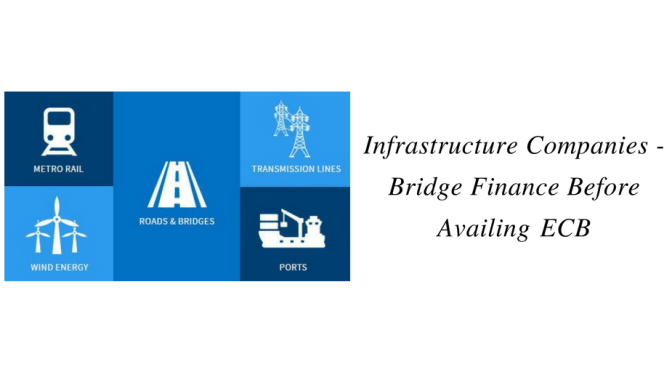
Infrastructure Companies – Bridge Finance before availing ECB
Considering the specific needs of the Infrastructure sector, RBI under its circular External Commercial Borrowing (ECB) – Bridge Finance for Infrastructure Dated 23-09-2011, reviewed the ECB policy. An amendment was made in this policy on 21-09-2012. Brief summary is given below:
Continue reading Infrastructure Companies – Bridge Finance before availing ECB
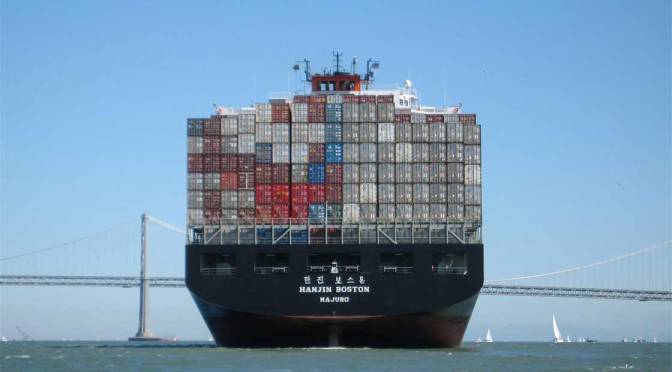
Buyers Credit on Capital Goods
New Article: Moratorium Period Impact on Buyers Credit
Buyers Credit can be used both for Raw Material and Capital Goods. Below article gives complete detailed information along with process and sample sanction letters.
Process Flow of Buyers Credit for Capital Goods
Term Loan Sanction –> LC Issuance for import of Machinery –> On the due date of payment of LC convert it to Buyers Credit and rollover it for 3 years –> At end of 3 years convert to term loan
Buyers Credit Interest Rate (LIBOR + Margin)
Change in LIBOR Tenures and Impact on Trade Finance
Earlier articles on Buyer’s Credit have provided details on total cost involved like, Interest cost, libor, lou charges, forwarding booking cost, arrangement fee, and others.
This article provides details on how interest cost (margin) is arrived at by Indian Bank Overseas Branches or Foreign Bank.
Continue reading Buyers Credit Interest Rate (LIBOR + Margin)
Bankwise Letter of Comfort / Undertaking Charges
Below given are Letter of Undertaking (LOU) / Letter of Comfort (LOC) charges: These charges detail information is as provided by respective bank’s website. These rates may vary from customer to customer, based on their negotiation with bank.
Continue reading Bankwise Letter of Comfort / Undertaking Charges

Buyers Credit on Gold Import
As per RBI Circular, Bank can open Letters of Credit and allow remittances on behalf of EOUs, units in SEZs in the Gem & Jewellery sector and the nominated agencies / banks, for direct import of gold, subject to the following
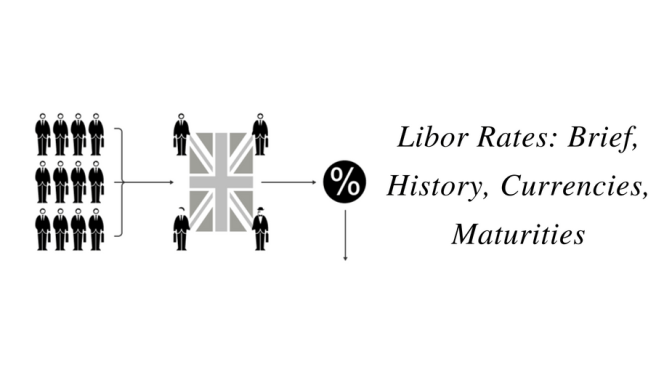
LIBOR Rates: Brief, History, Currencies, Maturities
Post below article there has been change in Libor Guidelines. Refer article “Impact of Libor Review on Trade Finance in India” & “Pushing the reset button on LIBOR – Speech by Martin Wheatley“
LIBOR in brief
LIBOR stands for London InterBank Offered Rate. LIBOR is an indicative average interest rate at which a selection of banks (the panel banks) are prepared to lend one another unsecured funds on the London money market. Although reference is often made to the LIBOR interest rate, there are actually 37 different LIBOR interest rates. LIBOR is calculated for 7 different maturities and for 5 different currencies. The official LIBOR interest rates (bbalibor) are announced once a day at around 11:45 a.m. London time by Thomson Reuters on behalf of the British Bankers’ Association (BBA).
Continue reading LIBOR Rates: Brief, History, Currencies, Maturities
Transaction where Buyer’s Credit is Restricted
Type of Transaction Where Buyer’s Credit Cannot be Done
- Incase of local trade
- Advance payment for Imports: Buyers Credit for any amount paid as advance either part or full is not allowed as RBI Caster Circular on External Commercial Borrowing and Trade Credit. Inference has to drawn the above circular. Circular says maximum tenure allowed for buyers credit from the date of shipment is (shipped on board date) upto 360 days in case of raw material and upto 3 years in case capital goods. Any Advance Payment always done before shipment of goods. And thus not allowed.
- Not allowed for import of services
Continue reading Transaction where Buyer’s Credit is Restricted

Sample format of Letter of Undertaking / Comfort (LOU / LOC)
Latest Article: Implication on Buyers Credit because of PNB Fraud
As mentioned in article “Procedure for Buyers Credit“, Post receipt of offer letter from Indian Bank overseas branch or Foreign Bank, Indian Bank has to send Letter of Comfort / Undertaking (a type of Bank Guarantee) to overseas bank as security before funding the transaction.
Continue reading Sample format of Letter of Undertaking / Comfort (LOU / LOC)

Import of Platinum, Palladium, Rhodium, Silver
Reserve Bank of India (RBI) in its circular dated 28-08-2008 had revised guidelines for Import of Platinum, Palladium, Rhodium and Silver. Extracts of the circular are given below.
Suppliers’ and Buyers’ credit, including the usance period of Letters of Credit opened for import of Platinum, Palladium, Rhodium and Silver should not exceed 90 days from the date of shipment. The revised directions will come into force with immediate effect.
Continue reading Import of Platinum, Palladium, Rhodium, Silver
Buyer’s / Supplier’s Credit on Rough, Cut and Polished Diamonds
Reserve Bank of India (RBI) in its circular dated 06-05-2011 has revised guidelines for import of Rough, Cut and Polished Diamonds. Extracts are given below.
Supplier’s Credit and Buyer’s Credit (Trade Credit) including the usance period of Letter of Credit (LC) opened for import of rough, cut and polished diamonds has been restricted to 90 days from the date of shipment from immediate effect.
Continue reading Buyer’s / Supplier’s Credit on Rough, Cut and Polished Diamonds

Buyer’s Credit Rollover
At the time of taking Buyers Credit, one would consider availability of tenure by banks, price variation based on tenure, etc. to arrive at tenure for which buyers credit is to be availed. On the due date, either the buyers credit is paid off or it can be further rollover for additional tenure.
Buyer’s Credit from Mauritius Based Foreign Bank
Since last week or so, Foreign bank branches based out of Mauritius are either not able to quote or are quoting above the RBI prescribed ceiling for 6 months LIBOR + 200 bps.
Reason being, low liquidity has resulted into high cost of funds.
Above will affect those importers who used to arrange funds from Mauritius based Foreign Bank which were somewhat cheaper than Indian Bank overseas branches but did not want to get into withholding tax. As per Double Taxation Treaty with Mauritius, withholding tax on interest payment to Financial Institution is nil.
Now options with them are either to take funds from Indian bank overseas branches at higher cost or from Foreign bank and pay withholding tax on due date.

Buyers Credit and Suppliers Credit Consultants
Who is Buyers Credit and Suppliers Credit Consultant ?
Person / Firm who co ordinates with Indian Overseas Branches or Foreign Bank and arranges best possible quote for transactions. They do not directly represent any of these bank. They are also known as Buyers Credit Brokers & Buyers Credit Agents
Continue reading Buyers Credit and Suppliers Credit Consultants

Difference between Buyer’s Credit and Supplier’s Credit
| Criteria | Buyers Credit | Suppliers Credit |
| Mode of Payment | Can be used for payment mode like LC, LC usance, DA, DP, & Direct Doc | Can be used only in case of LC transactions |
| LC Clauses | No additional clauses or Amendment is required in LC | At the time of opening LC or amending LC clauses given by Suppliers Credit bank needs to be changed. Like Negotiation Clause, Confirmation Clause, Reimbursement Clause |
| Arrangement | Can be arranged after documents have reached the bank or documents are received by importer directly | Has to be arranged at the time of opening LC or before shipment of goods |
| Cost | Interest Cost | LC Advising Cost, LC Amendment Charges, Document Processing Charges, Courier Charges, Conformation Cost and Interest Cost |
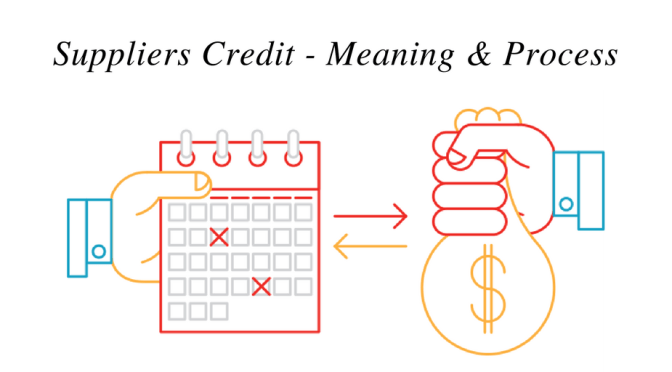
Supplier’s Credit – Meaning & Process
What is Supplier’s Credit ?
Supplier’s Credit is a structure of financing import into India. In this structure, overseas suppliers or financial institutions outside India provide financing to importer on Libor linked rates against usance letter of credit (LC).

Buyers Credit in Cross Currency
Note: Since the time this article was written, 6 Month Euribor has come down from 1.79% (July 2011) to 0.070%. Concept of cross currency still holds but the example would change. Please take below example as reference only.
Question of Buyers Credit in Cross Currency comes up in below cases.
- International trade is carried out in USD, EUR, JPY and other currencies. But when it comes to arranging buyers credit, arranging buyers credit against USD and EUR is much easier, with better price range and more options of banks to choose from is than in other currencies. But even with above understanding, at times it is not possible to transact in these currencies and thus cross currency buyers credit is required.
- Possibility of arbitrage. Meaning move transaction from say Euro to USD because of difference in costing may result in some cost saving. Has been explained in detail further in the article with example.
Process flow for doing Cross Currency
At the time of receipt of the document, importer will book a cross currency Spot+2 or forward as per his comfort with his bank, to get the exact conversion from one currency to other currency. Rest of the process is same as buyers credit which importers already carry out.
Example of Cross Currency from Arbitrage perspective
Cross currency can at times, lead to cost saving. An Example of import payment due in Euro to buyer’s credit into Dollar is given below.
Assumption
Transaction Value: EURO $100000
USD Value of Buyers Credit: $141713 (as per current market)
Tenure: 6 Months
Quote under both USD and EURO is L + 1.50%
LOU Charges are same for both transactions
Forward for both currency is booked (Rate taken from NSE India Website)
Market Rates – 15/07/2011
6 Month EURO Libor Rate: 1.79188%
6 Month USD Libor Rate: 0.41575%
6 Month EURO Forward Premium: 1.60 (64.64 – 63.07)
6 Month USD Forward Premium: 1.235 (45.73-44.49)
Calculations (LOU charges not are taken below, as per assumption that it is same in both transaction)
| Currency Amount | LIBOR | Margin | L + M | 180 days | INR Interest Cost | Forward Premium | In INR | |
| EURO 100000 | 1.79 | 1.5 | 3.29 | 1646 | 106394 | 160000 | 266394 | |
| USD 141713 | 0.42 | 1.5 | 1.92 | 1357 | 62075 | 175016 | 237091 | |
| Savings | 29303 |
Other factor to be considered before taking decision
Cross currency Foreign Exchange margin charged by bank on such transaction
Letter of Comfort / Undertaking (LOC/LOU) Charges
Latest Article:
Note: Since the article is written, lou charges of BOB has changed but concept still holds true as some banks still have such differential pricing.
Continue reading Letter of Comfort / Undertaking (LOC/LOU) Charges
Useful links in relation to Buyers Credit
1. ECB Form (Application Form for Buyers Credit /Supplier Credit)
2. Buyers Credit Cost Calculation Sheet
3. Current Exchange Rate
4. Future / Forward Rates of USD, EURO, GBP, JPY
WHT (Withholding Tax) on interest on Buyers Credit
What is WHT (Withholding Tax) ?
Under Sec 195 of Income Tax Act 1961, Tax is required to be deducted on the interest amount paid by the Indian corporate to overseas lenders (bank / suppliers) on the loans taken.
Continue reading WHT (Withholding Tax) on interest on Buyers Credit
RBI Trade Credit (Buyers/Suppliers Credit) Circular Extract
New Article: RBI Circular : Trade Credit – New Regulatory Framework
Updated on 19 October 2016
Trade Credits refer to the credits extended by the overseas supplier, bank and financial institution for maturity up to five years for imports into India. Depending on the source of finance, such trade credits include suppliers’ credit or buyers’ credit. Suppliers’ credit relates to the credit for imports into India extended by the overseas supplier, while buyers’ credit refers to loans for payment of imports into India arranged by the importer from overseas bank or financial institution. Imports should be as permissible under the extant Foreign Trade Policy of the Director General of Foreign Trade (DGFT).
Continue reading RBI Trade Credit (Buyers/Suppliers Credit) Circular Extract

Procedure for Buyers Credit in India
Further to my earlier article, Importer will have to follow below procedure and internal checks to avail buyers credit.
Buyers Credit – Meaning, Process, Cost & Regulations
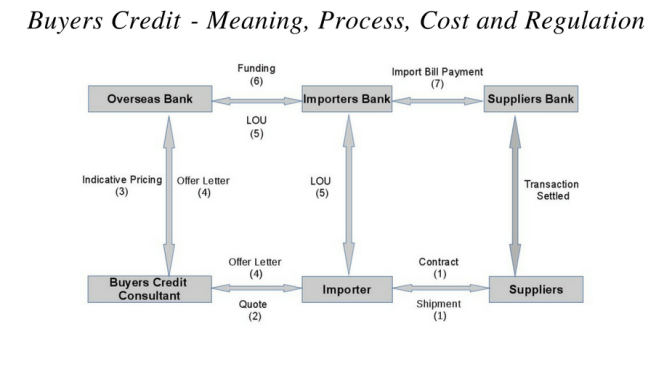
Buyer’s Credit refers to loans for payment of imports into India arranged by the importer from a bank or financial institutions outside India. Based on letter of undertaking of Importer’s bank, Overseas bank credits the Nostro of the importer’s bank which in turn uses the funds to make payment to the Suppliers bank against the import bill.
Continue reading Buyers Credit – Meaning, Process, Cost & Regulations
 Buyer's Credit & Supplier's Credit